

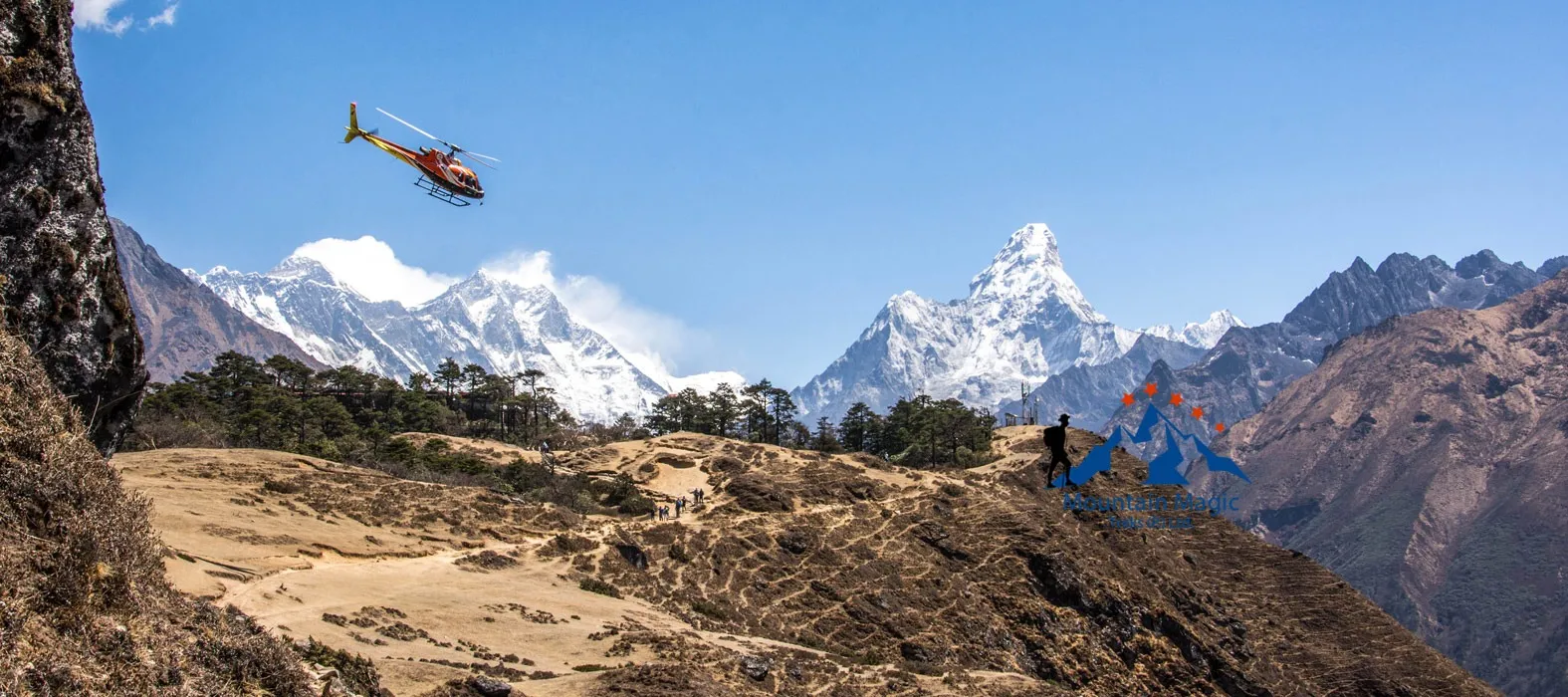
Mount Everest may be the reason many travelers start planning this adventure, but the mountain is only one part of the story.
The Everest Base Camp Trek With Helicopter Return takes you through the Khumbu region, where mountain life, Buddhist traditions, Sherpa communities, and old walking trails are part of everyday life. You spend days moving through this landscape before reaching Everest Base Camp and Kala Patthar. After that, the helicopter gives you a completely different way to leave the mountains.
The listed itinerary covers 10 days and includes acclimatization in Namche Bazaar and Dingboche. The highest point is Kala Patthar at about 5,545 meters. The return flight is planned from the Gorakshep area toward Kathmandu.
Everest Is Not the Only Story Here
It is easy to think of the Everest region as a place filled only with trekkers and climbers.
That is not the full picture.
People have lived in these mountains for generations. Villages along the trail are not simply tourist stops. They are real communities where families work, trade, farm, run lodges, and maintain their local traditions.
The Trail Connects More Than Villages
The walking route has long been important for movement through the Khumbu.
Today, trekkers use the same paths to reach higher settlements, while local people continue using them for daily travel and trade.
This makes walking through the region feel different from hiking on a closed tourist trail.
You are moving through a living community.
Sherpa Culture Is Part of the Experience
The Khumbu is closely connected with Sherpa culture.
As you travel through villages such as Namche Bazaar and Tengboche, you can notice Buddhist symbols, prayer flags, monasteries, and traditional buildings.
These details are easy to miss if you are focused only on reaching Everest.
Take Time to Observe
You do not need to become an expert in local culture to appreciate it.
Watch how prayer wheels are used. Notice the colorful flags along the trail. Look at the stone walls and traditional homes.
Small details can tell you a lot about the place you are visiting.
Most importantly, show respect.
Ask before photographing people, especially during religious activities or private moments.
Namche Has a Life of Its Own
Namche Bazaar is one of the best-known settlements in the Everest region.
It sits at around 3,440 meters and serves as an important stop for trekkers heading higher into the mountains. The itinerary includes an acclimatization day here.
But Namche is more than a place to adjust to altitude.
Spend Some Time Away From the Main Trail
Walk around the settlement instead of spending your entire free day inside the lodge.
You can explore local shops, see how supplies move through the area, and enjoy the views around the town.
The village also gives you a chance to slow down before the trail becomes more remote.
That change in pace is useful.
Tengboche Brings the Spiritual Side of the Journey
Tengboche is known for its monastery and mountain setting.
The trip itinerary includes a visit to Tengboche Monastery as the route moves higher into the Everest region.
For many travelers, this becomes one of the more peaceful parts of the trek.
Understand the Meaning of a Monastery
A monastery is not simply another sightseeing attraction.
It is a place of worship and an important part of local life.
Keep your voice low, follow instructions from staff, and avoid disturbing people who are praying.
Being respectful does not require much effort, but it makes a real difference.
The Food Tells Its Own Story
Food becomes a surprisingly important part of a long trek.
After several hours of walking, a warm meal can feel like a reward.
The trip package lists breakfast, lunch, and dinner as included meals.
Simple Meals Work Well in the Mountains
You do not need fancy food when you are trekking.
Warm rice, soup, noodles, vegetables, potatoes, and other basic meals can provide the energy you need.
You may also notice that your food choices change as you climb.
At higher elevations, keeping meals simple and eating enough can be more useful than searching for variety.
Tea Houses Become Temporary Homes
During the trek, tea houses provide a place to sleep and recover after long days.
The listed accommodation includes tea houses in the mountains, while Kathmandu stays are at a three-star hotel under the standard trip details.
Do Not Expect City Comfort
Mountain accommodation is simple.
Rooms may be basic, and shared spaces often become the warmest place to spend the evening.
But that simplicity is part of the experience.
You are there to experience the mountains, not recreate a city hotel at 4,000 or 5,000 meters.
The People You Meet Become Part of the Memory
One of the best things about a multi-day trek is the number of people you meet.
You may start talking with someone during breakfast and see them again several days later.
You might share a table with travelers from another country or exchange advice with someone walking in the opposite direction.
Everyone Has a Reason for Being There
Some people come because they have dreamed about Everest since childhood.
Others want to challenge themselves.
Some simply want to see what the Himalayas feel like.
You may discover that the person walking beside you has a completely different reason for making the trip.
That makes conversations on the trail surprisingly interesting.
The Higher You Go, the Quieter It Gets
After Dingboche, the landscape becomes more open and the settlements become less frequent.
Trees become scarce. The trail passes through rocky terrain, and the mountains seem to take up more of the view.
The itinerary includes an acclimatization day at Dingboche before continuing toward Lobuche and Gorakshep.
Silence Can Be Part of the Experience
There may be stretches where you hear very little apart from wind, footsteps, or a distant river.
Do not feel that every part of the trek needs conversation.
Sometimes the best thing you can do is walk quietly and watch the landscape.
Everest Base Camp Feels Different After So Many Days
When you finally reach Everest Base Camp, the moment carries more meaning because of everything that came before it.
The trip details place Base Camp at about 5,364 meters. From here, trekkers can see the dramatic Khumbu Icefall and surrounding glacier landscape.
Remember What You Have Already Seen
Think back to the beginning.
The green surroundings near the lower trail may now seem very far away.
You have crossed bridges, climbed steep paths, slept in mountain villages, and spent days adapting to a completely different environment.
Base Camp is the destination, but the journey gives it value.
Kala Patthar Gives You One More Big Moment
The trek then reaches Kala Patthar, listed at about 5,545 meters.
From this high point, you can see Everest along with peaks such as Pumori, Lhotse, and Nuptse.
The View Is Bigger Than One Mountain
Everest gets the headline.
But standing at Kala Patthar makes it easier to understand the size of the entire Himalayan landscape.
You can see ridges stretching across the horizon and deep valleys far below.
It is a reminder that Everest is part of a much larger mountain world.
The Helicopter Gives the Region a New Meaning
After walking through the Khumbu for several days, the helicopter return feels almost unreal.
The listed plan has the helicopter pick up trekkers around Gorakshep or slightly higher, depending on weather and wind. Short stops may occur around Hotel Everest View or Namche before the flight continues toward Kathmandu.
This is where the Everest Base Camp Trek With Helicopter Return offers something a normal trekking itinerary does not.
Watch Your Journey From Above
The trail that once took hours to walk can look tiny from the air.
Villages become small clusters.
Rivers become thin lines.
Mountain valleys that seemed enormous suddenly fit into one wide view.
You get to see the same landscape twice: first as a trekker and later from above.
Weather Should Always Be Respected
The helicopter return depends on mountain conditions.
The trip page notes that wind and weather can affect the route and possible stops.
That means travelers should not treat the flight schedule like a train timetable.
Keep Your Plans Flexible
If weather causes a delay, patience is necessary.
Do not build an important international connection too close to your expected helicopter arrival.
A little extra time in your schedule can make the end of the trip much less stressful.
When Does This Trip Work Best?
The trip page lists February through May and September through December as the best months. It specifically highlights spring and autumn for clearer skies and more stable conditions.
Spring can bring blooming rhododendrons at lower elevations.
Fall often offers clear mountain views after the monsoon season.
Neither season guarantees perfect conditions, though.
The mountains always have the final word.
What Makes This Trek Worth Doing?
The Everest Base Camp Trek With Helicopter Return is not simply a way to reach Everest faster.
It gives you time to experience the people and places that make the region special.
You walk through Sherpa villages. You see Buddhist traditions. You sleep in tea houses. You share meals with other trekkers. You slowly enter a colder and quieter mountain world.
Then you leave by helicopter and see the entire region from above.
That combination is difficult to recreate anywhere else.
Conclusion
Mount Everest may be the name that attracts travelers, but the Khumbu region gives the journey its real character.
The Everest Base Camp Trek With Helicopter Return lets you experience that character on foot before finishing the adventure in the air.
Take time to notice the people around you. Respect local traditions. Enjoy the simple meals. Talk to other trekkers. Look beyond the famous peaks.
Because when you return home, you may remember the photograph of Everest.
But you will probably remember the people, places, and small moments that helped you reach it even more.
FAQs
How long is the trek?
The listed trip length is 10 days from arrival to departure in Kathmandu.
Where do trekkers stay during the mountain section?
The trip uses tea house accommodation during the trek and a three-star hotel in Kathmandu under the listed standard package details.
What is the highest point of the journey?
Kala Patthar is listed as the highest point at approximately 5,545 meters.
Does the trip include acclimatization?
Yes. The itinerary includes acclimatization stops at Namche Bazaar and Dingboche.
Does the helicopter always fly directly to Kathmandu?
The return plan can include short stops depending on weather, wind, and flight operations before continuing toward Kathmandu.